Camouflage in Nature: How Animals Hide in Plain Sight
Some animals blend in so well you could walk right past them. Here is the science of camouflage, explained for families.
By The Spark Six team
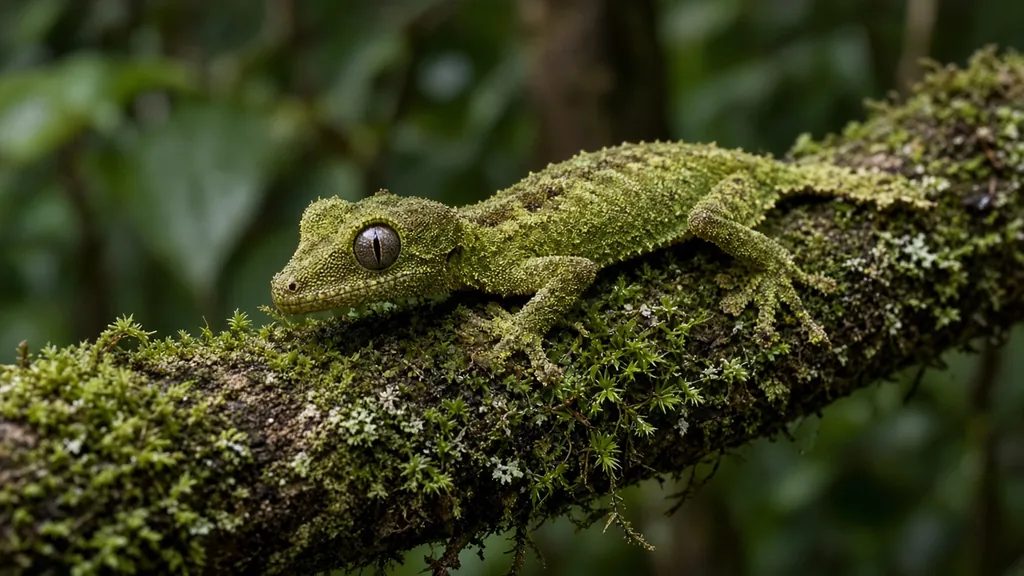
Look closely at a mossy branch and you might find a surprise looking back at you. Many animals have colors, patterns and shapes that help them blend into the world around them. That is called camouflage, and it is one of nature's cleverest tricks.
What is camouflage?
National Geographic describes camouflage as a way organisms disguise their appearance, usually to blend in with their surroundings [1]. It can hide where an animal is, what it is, or how it moves [1]. Camouflage helps prey animals avoid predators, and it also helps predators sneak up on prey [1].
Camouflage is still a lively area of scientific research, with new discoveries about how animals hide and how predators see [2].
Different ways to hide
Camouflage isn't just one trick. Here are some of the main kinds:
- Matching the background. An animal's color matches where it lives, like a white animal on snow or a green frog on a leaf.
- Breaking up the outline. Spots and stripes can make an animal's shape harder to see.
- Looking like something else. A stick insect looks like a twig. Some caterpillars look like bird droppings.
- Hiding in a crowd. National Geographic gives the example of zebras: in a big herd, the stripes make it hard for a predator to pick out a single animal [1].
Camouflage depends on who is looking
Here is a fun fact for older kids. National Geographic explains that camouflage is also shaped by what predators can see. Lions, the main predator of zebras, are color-blind, so zebras do not need to match the color of the grass to be hard to pick out [1].
Animals that change in seconds
Some animals can change their camouflage as they move. In a study published in Nature, researchers showed that a tropical flatfish, the peacock flounder, can match the pattern of the sea floor beneath it in just 2 to 8 seconds by adjusting the spots on its skin [3].
Octopuses, squid and cuttlefish are famous for this too. These animals, called cephalopods, can rapidly change their appearance to blend in, which scientists call dynamic camouflage [4].
Play “spot the hidden animal”
You can turn this into a family game:
- Search with your eyes, not your hands. On a walk, look slowly from top to bottom and side to side. Count how many bugs, birds or snails you spot.
- Make a hidden paper animal. Like Kiana in our story, color a paper butterfly to match a tree trunk or a rug, and hide it in plain sight. Take turns finding it.
- Pattern match. Cut animal shapes from scraps of patterned paper, then place them on matching and non-matching backgrounds. Which is easier to see?
- Keep score. Draw a star for each hidden thing you find, just like the Spark Six do.
Be kind to hiders
Camouflage helps keep many small animals safe. When you find one, it's best to look, smile and leave it where it is. Never pick up or poke wild animals. This is a big part of our story Can You Spot the Hidden Animals?, where Liala reminds her friends to let the animals be.
Talk about it
- Which hidden animal would be hardest for you to find?
- If you were an animal, where would you hide, and what color would you need to be?
- Why might some animals want to be easy to see instead? (Think of the bright blue frog in The Bright Blue Frog.)
Nature is full of clever hiders. Once you start looking, you'll see camouflage everywhere.
This week, try
- Play “spot the hidden animal” on one walk, counting with stars, and touching nothing.
- Hide a colored paper butterfly somewhere in your home and take turns finding it.
- Read Can You Spot the Hidden Animals? and talk about Liala's rule: look, smile and leave it be.
Common questions
Is camouflage only about color?
No. Shape, pattern and even behavior matter. A stick insect hides by looking like a twig, and some animals stay very still so they don't catch a predator's eye. Many animals use more than one trick at once.
Can animals change their camouflage?
Some can. A tropical flatfish, the peacock flounder, can match the pattern of the sea floor in just 2 to 8 seconds [3]. Octopuses and their relatives can also change their appearance quickly to blend in [4].
Why are some animals brightly colored instead?
Some animals want to be seen. Bright colors can be a warning that says “don't eat me.” The poison dart frog in our Jungle Adventure is a good example, and it makes a great contrast to camouflage when you talk about it with your child.