The Layers of the Rainforest, Explained for Families
From the shady forest floor to the giant emergent trees, a rainforest is stacked in layers. Here is a simple guide you can share with your child.
By The Spark Six team
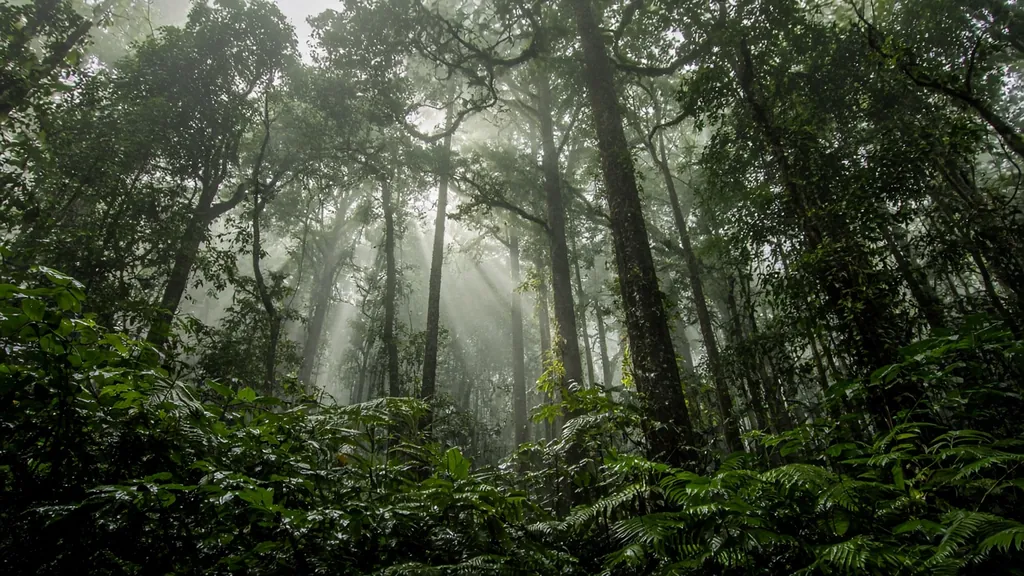
Ask a child to draw a forest and you will probably get a row of trees on a line of grass. A tropical rainforest is far more interesting than that. It is stacked in layers, a bit like a tall building with different floors, and each floor has its own light, weather and animals.
Four main layers
National Geographic describes most rainforests as having four layers: the emergent layer, the canopy, the understory and the forest floor [1]. Each layer is different because it gets different amounts of water, sunlight and moving air. The layers are also connected, so what happens in one affects the others [1].
Some scientists split the forest into even more layers. Mongabay, a long-running rainforest resource, describes primary tropical rainforest as having at least five, by adding a shrub layer just above the ground [2]. For young children, four is plenty.
The emergent layer: the tallest trees
At the very top are the emergent trees. Their crowns poke out above everything else, reaching around 20 to 100 feet above the rest of the canopy [2]. Up here it is sunny and windy. In our story The Tallest Trees, Kayla explains that these trees are racing to reach the light.
The canopy: the leafy roof
Below the emergent trees is the canopy. It is a dense ceiling of closely spaced trees and branches [2]. Think of it as the roof of the forest. It catches much of the sunlight, which is why the floors below can feel so shady.
The understory: the shady middle
The understory sits under the canopy. Here the trees are smaller and more widely spaced [2]. It is darker and calmer, and many plants here have large leaves to catch the little light that gets through.
The forest floor: dark and busy
At the bottom is the forest floor. Very little sunlight reaches it. Fallen leaves, seeds and branches collect here and break down, which is part of how the forest recycles. In Four Floors of the Jungle, the Spark Six climb from the floor all the way up, one layer at a time.
The biggest rainforest of all
The Spark Six's jungle adventure takes place in the Amazon. National Geographic notes that the Amazon Basin supports the world's largest rainforest, which accounts for more than half of the total volume of rainforests in the world [3]. It stretches across much of Brazil and Peru, and parts of several other countries in South America [3].
Easy ways to explore layers at home
You do not need a jungle to explore these ideas. Try one of these:
- Make a layer tower. Stack four boxes or books and label them emergent, canopy, understory and forest floor. Let your child place toy animals or drawings on the floor where they think each one lives.
- Look up, then down. On a walk in a park, stand under a tree. Look at the top, then the middle, then the ground. Which part is sunniest? Which part is shadiest?
- Light and shade test. With a grown-up, put a small houseplant near a window and watch which way its leaves turn over a week. It is a gentle way to see that plants grow toward light.
- Draw a layer cake. Like Kiana in our story, draw the forest as a cake with four layers, and color each layer.
Talk about it
A few questions to ask after reading:
- Which layer would you most like to visit? Why?
- Why do you think the forest floor is so dark?
- What might live in the canopy?
Rainforests are full of big ideas for small explorers. Start the whole journey on our Jungle Adventure trail.
This week, try
- Read The Tallest Trees and Four Floors of the Jungle on two evenings in a row.
- Build a four-layer “jungle tower” from boxes and let your child sort toy animals onto each floor.
- On a walk, find the sunniest and shadiest spot under one tree and talk about why they're different.
Common questions
How tall are the tallest rainforest trees?
The emergent trees are the giants. Their crowns rise around 20 to 100 feet above the rest of the canopy [2]. For a child, you might say that's taller than several houses stacked on top of each other.
Why is the forest floor so dark?
The canopy above is a thick, leafy roof that catches most of the sunlight before it can reach the ground [2]. Only small patches and thin beams of light make it all the way down, which is why seedlings on the forest floor stretch toward any bright spot.
Are all rainforests hot?
The rainforests in our Jungle Adventure are tropical, which means warm and wet all year. There are also temperate rainforests in cooler places. A fun follow-up is to look at a map together and find where the world's tropical rainforests are.