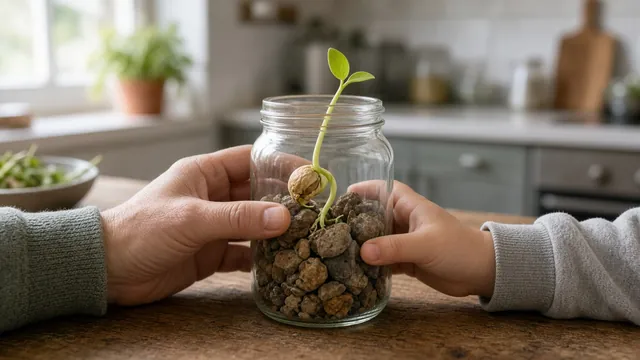
STEM Play at Home: Simple, Safe Ideas That Spark Real Thinking
Blocks, paper and a bit of curiosity go a long way. Here is why open-ended play matters, and simple ideas to try today.
By The Spark Six team
STEM stands for science, technology, engineering and math. It can sound like something that needs expensive kits. In fact, some of the best STEM play for young children uses things you already have: blocks, paper, water, cardboard and a curious mind.
Play is serious work
The American Academy of Pediatrics published a report called “The Power of Play.” It describes play with parents and peers as a key way for children to build social-emotional, thinking, language and self-regulation skills [1]. The report also stresses that play is not frivolous [1].
NAEYC, the leading organization for early childhood educators, also offers families and educators research-based resources on the value of play [2].
Children explore like little scientists
When something is puzzling, children often explore it more. In a study by Laura Schulz and Elizabeth Bonawitz, preschoolers were given toys where it was unclear what caused what. The children chose to play more with these puzzling toys, and during free play they figured out how the parts worked [3].
This means children's play can be a way of testing ideas, even when it looks like messing around.
Leave room to discover
Another study by Bonawitz and colleagues found that when an adult directly taught preschoolers one thing a toy could do, children mostly focused on that one thing. Children who weren't given a lesson explored the toy more broadly and found more of its features [4].
So try not to show every answer straight away. Set things up, ask a question, and let your child explore.
Simple toys, rich talk
Gadgets aren't always better. In a study of parents playing with infants, Anna Sosa found that playing with electronic toys was linked to fewer adult words and fewer back-and-forth conversational turns than playing with books or traditional toys [5]. Simple toys often invite more talking, guessing and wondering together.
Five safe STEM play ideas
Each of these uses everyday materials. Always play together, and keep small items away from children who still put things in their mouths.
1. Ramp races (engineering and forces)
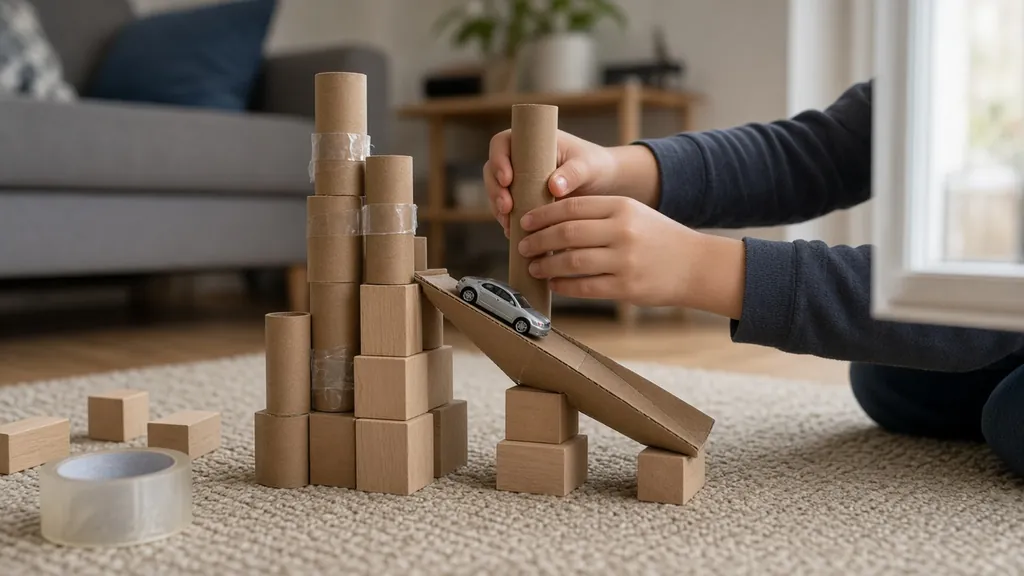
Lean a board or a big book against a sofa. Roll different objects down: a ball, a toy car, a block. Which goes farthest? What happens if you make the ramp steeper?
2. Strong shapes (engineering)
Make a square and a triangle from craft sticks or paper strips and tape. Press gently on each corner. Which one keeps its shape? This is just what Mo discovers in Why Are Triangles So Strong?.
3. Paper drop (science)
Drop a flat sheet of paper and a crumpled sheet at the same time. Which lands first? Why? Our gravity story, Why Do Things Fall Down?, explores this.
4. Sink or float (science and math)
Fill a bowl with water. Before each test, guess: will it sink or float? Try a spoon, a cork, a leaf and a toy boat. Keep a tally chart.
5. Shadow tracking (science)
On a sunny day, place a toy outside and trace its shadow with chalk in the morning and again in the afternoon. Why did it move? This links to Anya's question in Where Does the Sun Go at Night?.
Good questions to ask during play
- What do you notice?
- What do you think will happen?
- How could we test that?
- What surprised you?
- What could we change next time?
Keep it playful
The best STEM play doesn't feel like a lesson. Follow your child's interest, celebrate surprises, and enjoy the mess a little. Looking for more ideas? Every Spark Six story ends with a simple fact you can test together.
This week, try
- Set up the ramp race on the floor and test three objects. Ask your child to guess first.
- Build a square and a triangle from craft sticks and tape, and press gently on each.
- Keep a simple tally chart for sink-or-float, and talk about any surprises.
Common questions
What age is right for STEM play?
Any age. For toddlers, it might be stacking and knocking over blocks or pouring water between cups. Older preschoolers can make guesses, test them and keep simple tally charts. Choose materials that are safe for your child's age.
Do we need to buy STEM kits?
No. Everyday items such as cardboard tubes, paper, tape, blocks, cups, water and a flashlight are enough for many great experiments. Open-ended materials often lead to more exploring than toys that only do one thing.
How do I keep it from getting messy?
Choose a play zone: a tray, a towel on the floor, or the bathtub for water play. Keep a cloth nearby, and make cleaning up part of the activity. A little mess is often a sign of a lot of exploring.